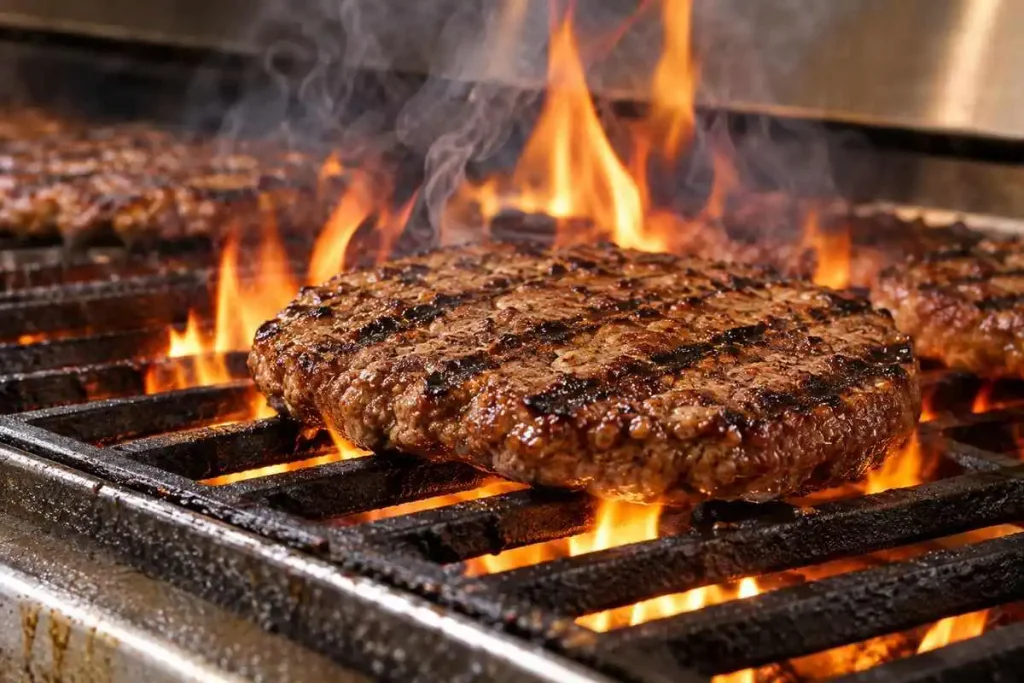
If you’ve ever wondered how are Whopper burgers cooked and why they taste noticeably different from a griddle-fried burger, the answer comes down to one thing: fire, not a flat metal surface. Burger King has built its entire brand identity around flame-grilling, and the Whopper is the clearest example of what that method actually does to a beef patty.
This post walks through the cooking process step by step, explains what “flame-grilled” really means in a commercial kitchen, and looks at what makes the Whopper specifically different from a standard flame-grilled burger. We’ll also cover whether the effect can be reasonably recreated at home.
What “Flame-Grilled” Actually Means
To understand how are Whopper burgers cooked, it helps to start with what “flame-grilled” actually means in a commercial kitchen. It isn’t just marketing language — it describes a specific method of cooking meat directly over an open flame, rather than on a solid hot surface like a griddle or flat-top. Most fast food burger chains use a griddle, where the patty sits on a flat metal plate heated from below. Burger King instead uses a broiler, where the patty travels on a moving grate directly above gas-fired flames.
It’s this automation that answers how are Whopper burgers cooked at scale — every patty across every restaurant goes through exactly the same flame-grilling process.
The Broiler Method Burger King Uses
Inside a Burger King kitchen, frozen or chilled beef patties are loaded onto a conveyor that carries them through a broiler chamber. Flames sit beneath the grate, and the patty cooks on both sides simultaneously as it moves through — there’s no manual flipping involved. This is the same basic principle as a barbecue grill, just automated and standardised so every patty across every restaurant cooks the same way.
How Whopper Burgers Are Cooked, Step by Step
The table below shows exactly how are Whopper burgers cooked, stage by stage — from raw patty to finished burger — so you can see where the flame-grilling happens and what else goes into building the Whopper.
| Stage | What Happens | Approximate Time |
|---|---|---|
| Loading | Beef patty placed onto the broiler conveyor grate | — |
| Flame-grilling | Patty passes directly over open gas flames, cooking both sides at once | Around 90 seconds |
| Resting | Cooked patty briefly rests before assembly | A few seconds |
| Assembly | Patty added to a toasted sesame seed bun with the Whopper’s standard toppings | Under a minute |
| Serving | Finished burger wrapped and served | Immediate |
The key takeaway from this breakdown is that the flame-grilling stage itself is short — it’s the direct contact with open flame, not a long cooking time, that produces the char marks and smoky flavour associated with the Whopper. If you’re ordering it as part of a meal rather than on its own, the cooking and assembly process stays identical — you can check portion sizes and pricing in our meals and combos guide before you order.
What Makes the Whopper Different From a Standard Flame-Grilled Burger
Flame-grilling explains the cooking method, but it doesn’t fully explain why the Whopper specifically has become Burger King’s signature item. A few things combine here. First, the patty size: the Whopper uses a larger beef patty than most of the chain’s other burgers, which changes how the char develops across the surface — more surface area means more contact with the flame relative to the centre of the patty staying juicy. This detail matters if you’re asking how are Whopper burgers cooked specifically compared with other burgers on the menu, since a bigger patty behaves differently over an open flame.
Second, the topping stack. The standard build includes fresh tomato, lettuce, onion, pickles, ketchup and mayonnaise on a sesame seed bun, and that mix of fresh, cold ingredients against a hot, slightly charred patty is a deliberate contrast that’s been part of the full WHOPPER range guide since the burger’s original design.
If you’re curious how much is a Whopper at Burger King currently, or want to see how the price has shifted over time, pricing sits alongside the rest of the standard menu rather than carrying any premium purely for the cooking method — flame-grilling is used across most of Burger King’s beef range, not just this one burger.
Flame-Grilling vs Griddle-Frying: Why the Method Matters for Taste
Comparing methods is really the clearest way to answer how are Whopper burgers cooked differently from a competitor’s. Griddle-frying cooks a patty in its own rendered fat, sitting flat on a hot surface. That produces a different kind of crust — often a more uniform, crispy sear across the whole face of the patty. Flame-grilling instead lets excess fat drip away through the grate and into the flame below, which is part of why flame-grilled patties can taste slightly leaner and smokier rather than fried. It’s also why char lines and slightly uneven browning are visually part of the Whopper’s identity rather than a flaw — that unevenness is a direct result of open-flame contact rather than a flat plate.
This difference is also reflected in how the wider menu is built. If you want to compare the Whopper’s whopper meal price against other flame-grilled options, or just see the rest of what’s on offer, you can browse the full UK menu from the homepage at any time.
Can You Recreate Flame-Grilled Whopper Burgers at Home?
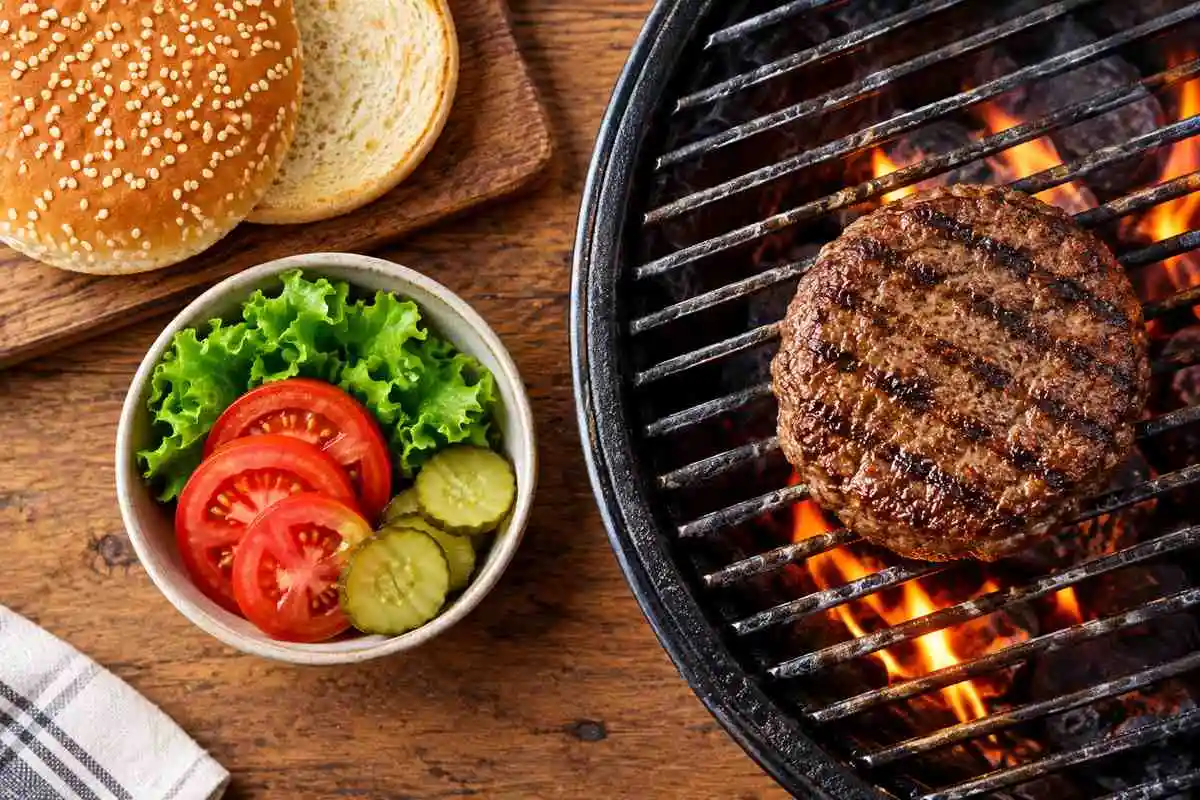
Once you understand how are Whopper burgers cooked in a commercial kitchen, recreating the effect at home becomes a lot more achievable. You won’t get an exact match without commercial broiler equipment, but a real outdoor barbecue or grill gets you close, because the underlying principle — open flame beneath the meat rather than a flat pan — is the same one Burger King relies on. A few practical points if you’re trying it:
- Use a beef patty with a reasonable fat content (around 20%) so it stays juicy despite direct flame exposure.
- Keep the patty over direct heat for a short, hot cook rather than a long, low one — this mimics the quick pass-through of a commercial broiler.
- Toast the bun separately, cut-side down, for a few seconds so it holds up to the toppings without going soggy.
- Build the toppings cold, straight from the fridge, for the same hot-cold contrast the original relies on.
If you’d rather skip the home version entirely and just want the real thing, it’s worth checking our current prices before you order, since Whopper pricing is reviewed periodically across the UK menu.
FAQs
Are all Burger King burgers flame-grilled, or just the Whopper?
When people ask how are Whopper burgers cooked versus the rest of the menu, the honest answer is that flame-grilling is used across most of Burger King’s beef burger range, not only the Whopper.
Does flame-grilling make the Whopper healthier than a fried burger?
Not significantly — how are Whopper burgers cooked doesn’t change the calorie count much.
How long does it actually take to cook a Whopper patty?
When people ask how Whopper burgers are cooked in terms of timing, the flame-grilling stage itself is quick — commonly cited as around 90 seconds, though Burger King doesn’t publish an exact figure, so this should be treated as an approximate industry-standard time rather than a confirmed number.
Can I ask for my Whopper patty cooked differently?
Since how are Whopper burgers cooked comes down to a fixed, automated broiler process, restaurant staff can’t usually adjust cooking time on the equipment itself, since it’s an automated conveyor system rather than a manual grill
Final Thoughts
The short version is that Whopper burgers are cooked by passing beef patties directly over an open gas flame on a moving broiler grate, rather than frying them on a flat griddle — and that method, combined with the Whopper’s larger patty and cold, fresh toppings, is a big part of why it tastes the way it does. It’s a simple mechanical process, but it’s also the one thing Burger King has built its entire identity around since the beginning.