
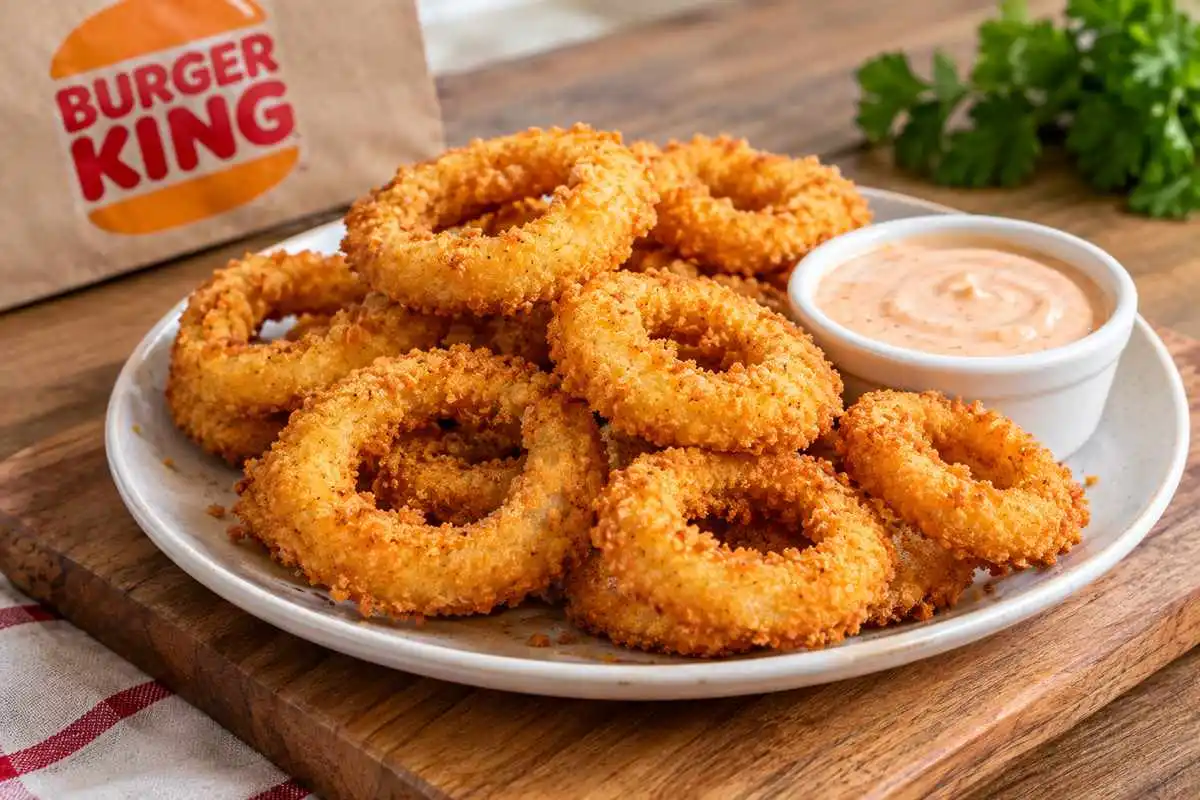
If you’ve ever wondered how to recreate that thick, crunchy, batter-coated ring you get from the drive-thru, this burger king onion rings recipe is built to get you close using a normal kitchen, not a commercial fryer. It’s not a leaked recipe or an official one — nobody outside the company has that — but it’s a genuinely good copycat version built by testing a few different batter ratios.
You’ll need about 30 minutes, a handful of ingredients most people already have in, and either a deep-fat fryer or a heavy pot with a thermometer. The method below walks through the exact coating order that gets a crunchy, not soggy, result, plus a few troubleshooting notes for where homemade versions usually go wrong.
What Makes Burger King’s Onion Rings Different
The main thing that sets a fast-food onion ring apart from a home one is the coating structure. Most homemade versions use a single dip in batter, which tends to slide off in the fryer and leave patchy, thin patches of crunch. A thicker, restaurant-style ring usually comes from a three-stage process: a light flour dust, then a wet batter, then a final dry coat pressed on before frying. That final dry layer is what gives you the deep ridges and audible crunch, rather than a smooth, thin shell.
Onion choice matters too. Thin, floppy slices burn before the inside cooks through, while rings cut too thick end up soggy and greasy. Around 1cm-thick slices from a large white or yellow onion give the best balance of a tender middle and a sturdy enough ring to hold its coating. Getting that structure right is really the whole point of this burger king onion rings recipe: a thick, ridged coating rather than a smooth, thin one.
Ingredients You’ll Need
The table below sets out everything this burger king onion rings recipe calls for, along with roughly how much you’ll need for four generous portions, so you can scale up or down depending on how many people you’re feeding.
| Ingredient | Amount (serves 4) | Notes |
|---|---|---|
| Large white or yellow onions | 2 | Sliced into 1cm rings, rings separated |
| Plain flour | 150g | Split between the dry dust and the dry coat |
| Cornflour | 50g | Mixed into the dry coat for extra crunch |
| Baking powder | 1 tsp | Lightens the batter so it doesn’t go dense |
| Cold sparkling water or soda water | 200ml | The carbonation helps create a lighter, crispier batter |
| Salt and black pepper | To taste | Season the flour mix, not just the finished rings |
| Vegetable or sunflower oil | Enough for deep-frying | Neutral oil with a high smoke point |
Sparkling water is doing more work here than people expect — the bubbles in the batter create tiny air pockets that fry up light rather than dense, which is one of the easiest single swaps for improving a homemade batter.
Step-by-Step: How to Make Copycat Burger King Onion Rings
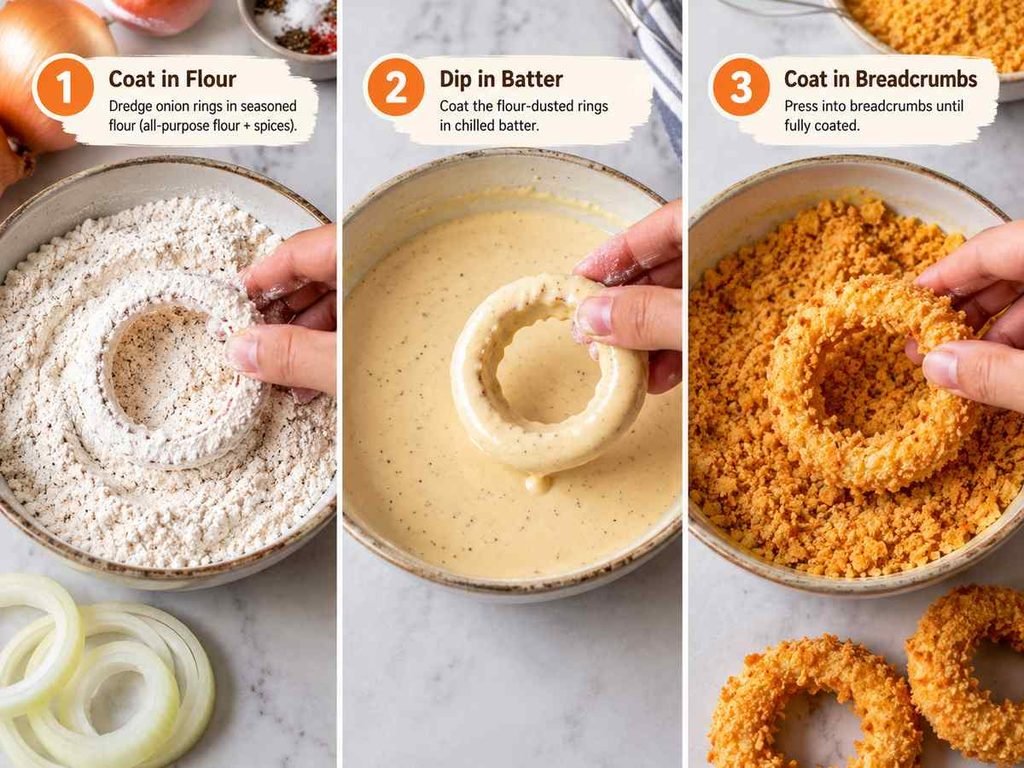
Follow this burger king onion rings recipe step by step for the closest match to a deep, ridged, fast-food-style coating.
- Prep the onions. Peel and slice into 1cm rings, then separate the individual rings and pat them dry with kitchen paper. Any surface moisture stops the first flour layer from sticking properly.
- Set up three coating stations. In the first bowl, put half the plain flour seasoned with salt and pepper. In the second bowl, whisk the remaining flour, cornflour, baking powder and sparkling water into a smooth, thick batter. In the third bowl, put a mix of the remaining cornflour and a little more plain flour for the final dry coat.
- Coat each ring. Dust a ring in the first bowl, shaking off any excess. Dip it into the wet batter, letting the extra drip off. Then press it into the dry coat bowl so the coating clings in a rough, textured layer — this is the step most home versions skip, and it’s the one that gives the ridged texture.
- Heat the oil. Bring your oil to 180°C. If you don’t have a thermometer, a cube of bread should turn golden in about 15 seconds.
- Fry in small batches. Lower 4–5 rings in at a time so the oil temperature doesn’t drop. Fry for 2–3 minutes, turning once, until deep golden brown.
- Drain and season. Lift out onto a wire rack (not paper towels, which trap steam and soften the base) and season with a little extra salt while still hot.
Getting the Crunch Right
If your rings come out pale or soft rather than crisp, it’s almost always the oil temperature that’s the issue — too low, and the coating absorbs oil and goes soggy before it’s browned. It’s worth checking the temperature between batches, since adding cold rings drops it every time. The other common fault is skipping the dry coat step, which is what gives the ridged, craggy texture rather than a smooth shell. Those two fixes solve almost every issue people run into with this burger king onion rings recipe.
Serving Ideas: Pairing With Other Burger King-Style Sides
Onion rings rarely turn up alone on a fast-food tray, and the same logic works at home — a mix of textures on the plate makes the meal feel more like the real thing. If you want to build out a proper sides spread, our official Onion Rings entry on the Sides Menu page has the closest restaurant comparison for portion size and how it’s usually served, which is a useful benchmark for judging your own batch.
For a proper copycat spread, it’s worth pairing your rings with a batch of homemade fries alongside a look at the current burger king fries price if you’re weighing up cooking versus buying. If you’d rather lean spicy, the Peppercorn Loaded King Fries is one of the more distinctive items on the current lineup and gives a good template for a loaded-fries side to go with your rings. More broadly, browsing the full burger king sides list is a good way to see what usually gets ordered together, if you want to recreate a full tray at home rather than just the rings from this burger king onion rings recipe.
None of this requires special equipment beyond a thermometer and a deep pot — if you want to see what the finished combination looks like on the actual menu before you start cooking, you can check the full Burger King menu here for reference.
How These Compare to Ordering the Real Thing
Approximate/Estimated note: Any pricing or nutrition figures for the actual restaurant item mentioned below are approximate, since Burger King doesn’t publish exact recipe ratios and prices can vary by location and change over time — treat these as a general guide rather than a live figure.
Cost is one of the clearest advantages of making this burger king onion rings recipe yourself rather than ordering. Cooking a batch at home is noticeably cheaper per portion than ordering, especially if you’re feeding more than one or two people, since a couple of onions and some pantry staples go a long way. The trade-off is time and clean-up — deep-frying at home takes prep, a wire rack, and a fair bit of oil, whereas ordering is obviously instant.
If you’re only after one portion, buying is usually still the more convenient option; if you’re cooking for a group or want to batch-fry ahead of a get-together, making your own tends to work out both cheaper and more flexible on quantity.
FAQs | Burger King Onion Rings Recipe
Can I bake these instead of deep-frying?
You can, though the texture won’t be identical — baking gives a lighter crunch rather than the deep-fried shell. Bake at around 220°C on a wire rack for 15–18 minutes, turning halfway, and spray lightly with oil before baking to help browning.
Why do my onion rings lose their coating in the fryer?
This is almost always down to moisture — either on the onion before coating, or the batter being too thin. Pat the onions fully dry first, and make sure the wet batter is thick enough to coat the back of a spoon rather than running off it.
What oil is best for frying onion rings?
A neutral, high-smoke-point oil like vegetable, sunflower or rapeseed oil works best. Avoid olive oil, which has a lower smoke point and a flavour that can overpower the batter.
Can I make the batter for this burger king onion rings recipe ahead of time?
The dry ingredients can be mixed and stored ahead, but add the sparkling water just before frying — once it’s flat, you lose the light, airy texture that makes the batter work.
Final Thoughts
Getting a genuinely crunchy, restaurant-style onion ring at home comes down to two things: a three-stage coating rather than a single dip, and keeping the oil hot enough that the coating crisps before it has time to absorb oil. Get those two right and the rest of this burger king onion rings recipe is fairly forgiving.