A burger king meal deal almost always beats buying the same burger, fries and drink separately — but “almost always” isn’t the same as “always,” and the exact saving varies more than most people assume. This comparison tests two real combinations side by side, using confirmed current prices rather than a general assumption about how much a meal typically saves.
The gap between a burger king meal deal and the same order bought piece by piece isn’t fixed either. As the two worked examples below show, the actual saving depends heavily on which main item you’re starting from, not just whether you choose the bundle. That’s a detail most general advice about meal deals skips over entirely.
For the full range this comparison draws from, the full Meals & Combos menu covers every current bundle beyond just the two examples used here.
How Burger King Meal Deal Pricing Works
Every standard Burger King meal follows the same format — a main item, medium fries and a medium drink, bundled at one price. The upgrade from ordering the burger alone to ordering it as a full meal typically adds somewhere between £2.00 and £2.50, according to Burger King UK’s own published guidance on how meal pricing works.
That fixed uplift is the whole mechanism behind why meals tend to save money. Fries and a drink bought individually usually cost more than that £2.00–£2.50 addition, which is what creates the saving in the first place rather than any special discount being applied.
This is worth understanding before looking at specific numbers, because it explains why the saving isn’t the same for every burger king meal deal — it depends on how the individual burger’s price compares to that fixed uplift, not on the meal deal itself changing.
Upgrading from a medium to a large size within a meal costs around £0.50 extra. That’s a separate cost on top of the base meal price, and it applies whether you’re upgrading fries, the drink, or both.
À La Carte Total: Item-by-Item
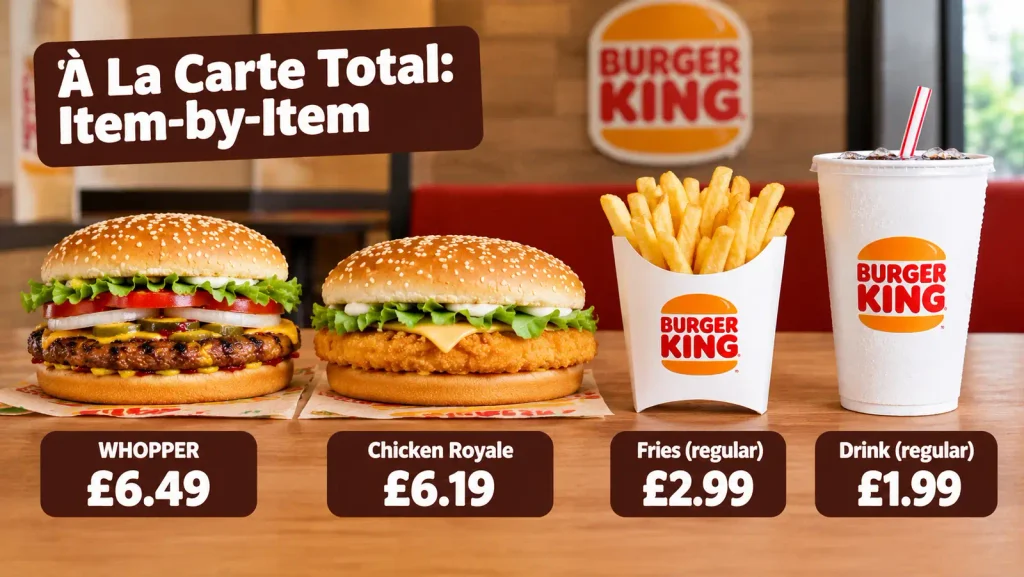
Buying the same three components separately, without any burger king meal deal bundling applied, means paying full price for each one.
These are the baseline figures used throughout this comparison. Every total below is built directly from this table, so the maths can be checked against these numbers rather than taken on trust.
Notice that the Chicken Royale is already £0.30 cheaper than the WHOPPER before fries or a drink are even added. That gap matters more than it might seem once the meal-deal comparison below is applied to each.
Side-by-Side Price Comparison
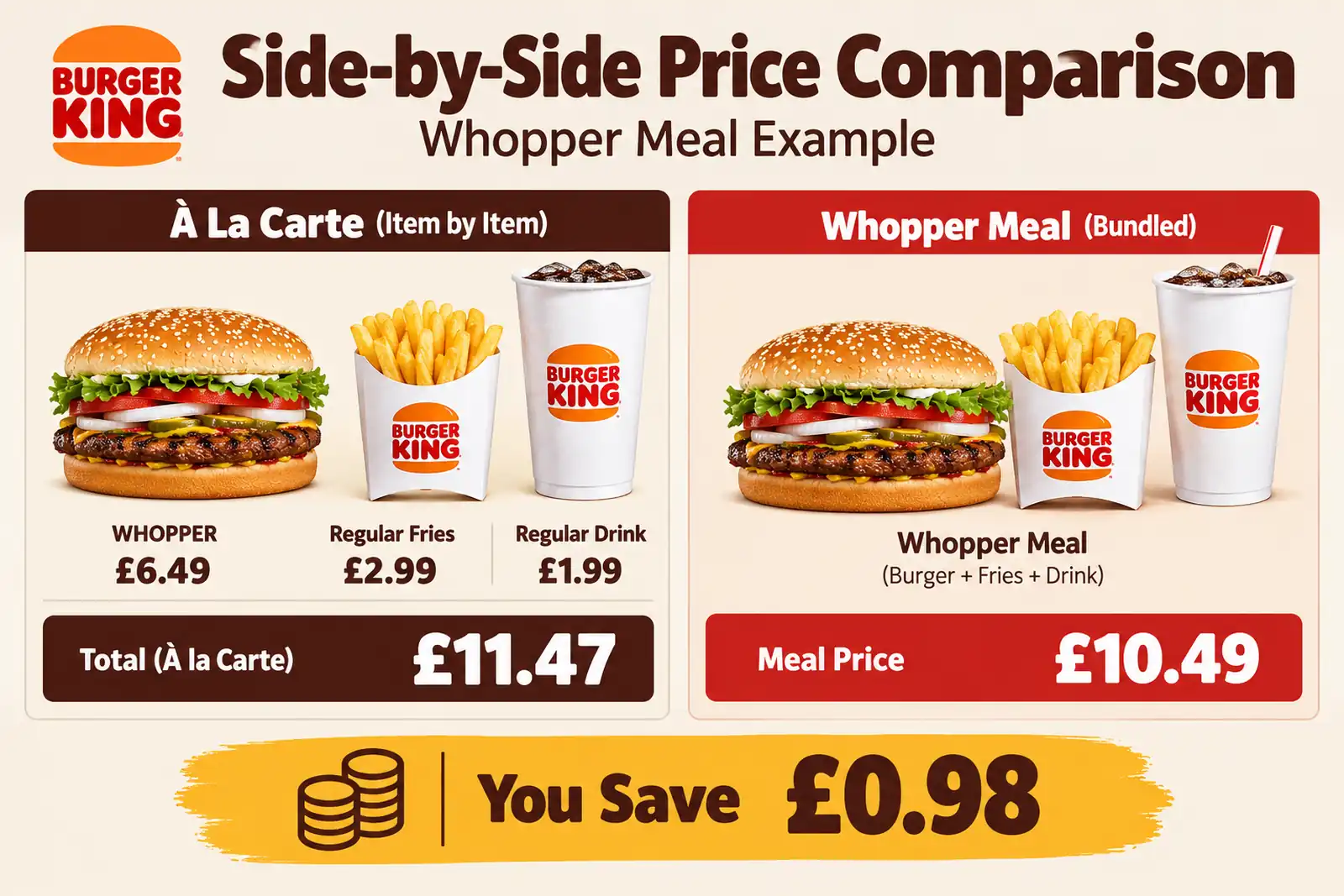
Whopper Meal Example
Ordering a WHOPPER, regular Fries and a regular Drink separately comes to £11.47 in total. The WHOPPER Meal — the same three components bundled — costs £10.49.
That’s a saving of £0.98 by choosing the meal over ordering à la carte. It’s a smaller gap than the “£2.00–£2.50 uplift” pattern might suggest, because the WHOPPER itself is priced higher than the average main item the meal-pricing pattern is built around, which narrows the percentage saved even though the underlying mechanism is identical.
Chicken Royale Meal Example
Ordering a Chicken Royale, regular Fries and a regular Drink separately comes to £11.17. The Chicken Royale Meal costs £8.99.
That’s a saving of £2.18 — more than double the WHOPPER example above. The Chicken Royale sits at a lower individual price than the WHOPPER, so the same fixed burger king meal deal uplift represents a proportionally bigger discount off the à la carte total.
This is the clearest illustration in this whole comparison of why “how much does a meal deal save” doesn’t have one single answer — the saving scales with how the main item’s individual price compares to the fixed £2.00–£2.50 uplift, not with anything about the meal deal changing between items.
Is Upgrading to a Large Always Worth It?
Not automatically. The roughly £0.50 large upgrade genuinely increases portion size, but whether that’s “worth it” depends entirely on whether you’d finish a large portion, not on the price alone.
For fries specifically, £0.50 for a noticeably bigger portion is generally reasonable value compared to the per-item price of a separate additional side. For a drink, the value case is weaker — a large fizzy drink mostly just means more of the same thing, with less of a practical benefit than a bigger fries portion offers.
The honest answer is that the large upgrade is worth it on a per-item basis more often for food than for drink, which is worth knowing before automatically saying yes to both when asked at the till.
Do King Savers Beat Meal Deals on Price?
Sometimes, but not consistently across the board. The King Savers value menu holds some of the lowest single-item prices on the entire menu, including the Hamburger at £2.99 — cheaper than any standard burger king meal deal main item alone, before fries and a drink are even added.
Where meal deals still win is on total combo value. A King Savers item bought alongside separate fries and a drink doesn’t carry the same bundling discount a proper meal deal does, so for a full three-part order, a genuine meal deal is still likely to beat piecing together a King Savers item with separate sides.
The choice really comes down to what you’re actually ordering. If it’s just a burger on its own, King Savers wins on price every time. If it’s a full meal with sides and a drink, the meal-deal format is built specifically to beat that same combination assembled piece by piece.
Are Meal Deals Available All Day?
Yes — the Burger King meal deal is generally a permanent part of the menu rather than a time-limited offer restricted to certain hours. This means customers can usually order a meal deal whenever the restaurant is open and serving the relevant item. This is different from certain promotional deals, which can be time-limited or app-exclusive, but the standard Burger King meal deal format itself is available throughout normal serving hours.
The one practical exception is breakfast, where standard lunch-and-dinner meal items simply aren’t being served during breakfast hours at locations that offer a separate breakfast menu. In this case, it is a menu-availability issue rather than the Burger King meal deal format itself being restricted to specific hours.
When À La Carte Actually Wins
À la carte ordering makes more sense in a few specific situations rather than as a general rule. If you don’t want the fries or the drink at all, ordering just the burger alone is obviously cheaper than paying for a burger king meal deal that includes items you won’t eat.
It also wins if you’re mixing components from different meals — for example, wanting a Chicken Royale with a side other than fries. Once you start substituting standard components, the clean “meal beats separate items” comparison from earlier in this article no longer applies in the same way, since you’re no longer comparing the same three items against each other.
For the current price of every individual item if you’re building a custom order this way, current à la carte prices covers the full menu rather than just the two mains used in this comparison. And if minimising total spend is the actual goal regardless of format, our cheapest items ranking covers the lowest-priced options across the whole menu, not just within the meal-deal structure.
FAQs: Meal Deal vs À La Carte
Is upgrading to a large always worth it?
Not automatically — it’s reasonable value on fries, where the portion increase is meaningful, but weaker value on a drink, where the extra amount matters less practically.
Do King Savers beat meal deals on price?
For a single item alone, yes — King Savers holds some of the lowest individual prices on the menu. For a full burger-fries-drink combination, a genuine burger king meal deal is still likely to cost less overall than piecing the same three items together separately.
Are meal deals available all day?
Yes — the standard meal-deal format is a permanent part of the menu, not restricted to specific hours, separate from any time-limited promotional offers.
Final Thoughts
A burger king meal deal beats ordering à la carte in both examples tested here, but the size of that saving depends heavily on which main item you’re starting from. Cheaper mains like the Chicken Royale see a proportionally bigger discount from the meal format than pricier ones like the WHOPPER, even though the underlying pricing mechanism — a fixed £2.00–£2.50 uplift — stays the same across the board.
Checking the full menu with prices before you order is still the most reliable way to confirm the exact numbers for whatever you’re actually choosing between. The pattern holds regardless of which specific items you’re comparing, but the exact saving is always worth checking rather than assumed.